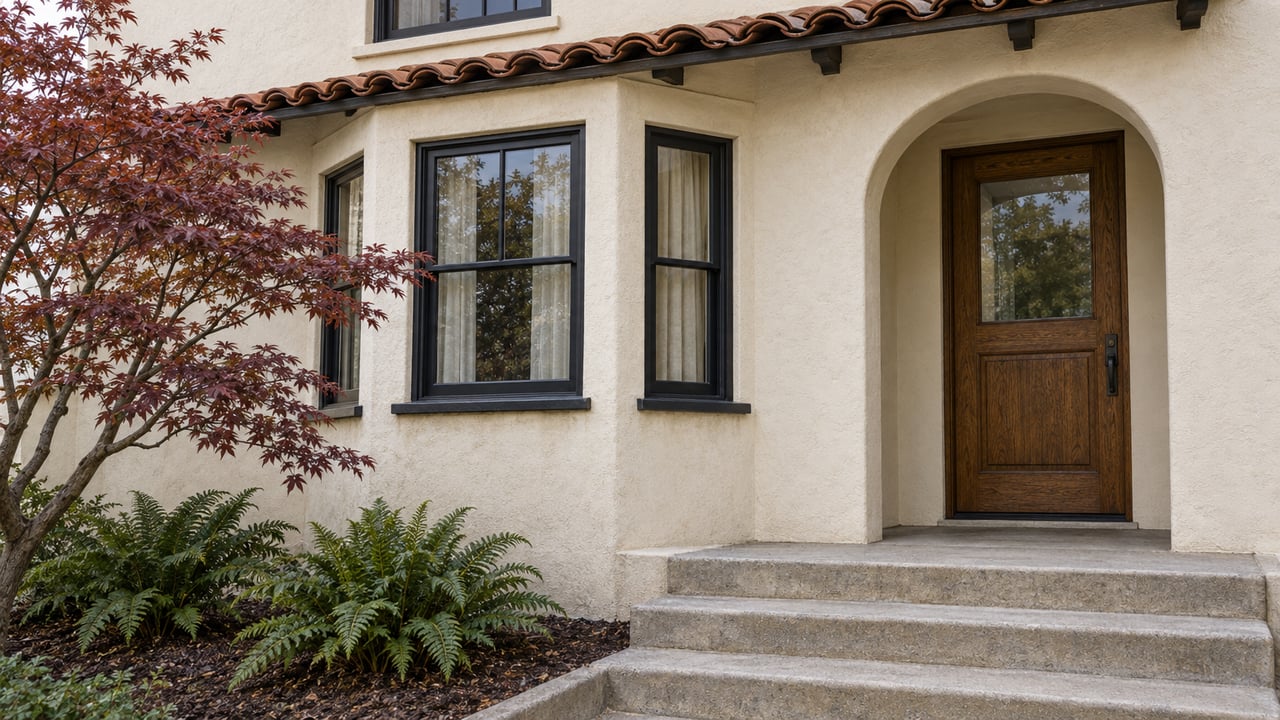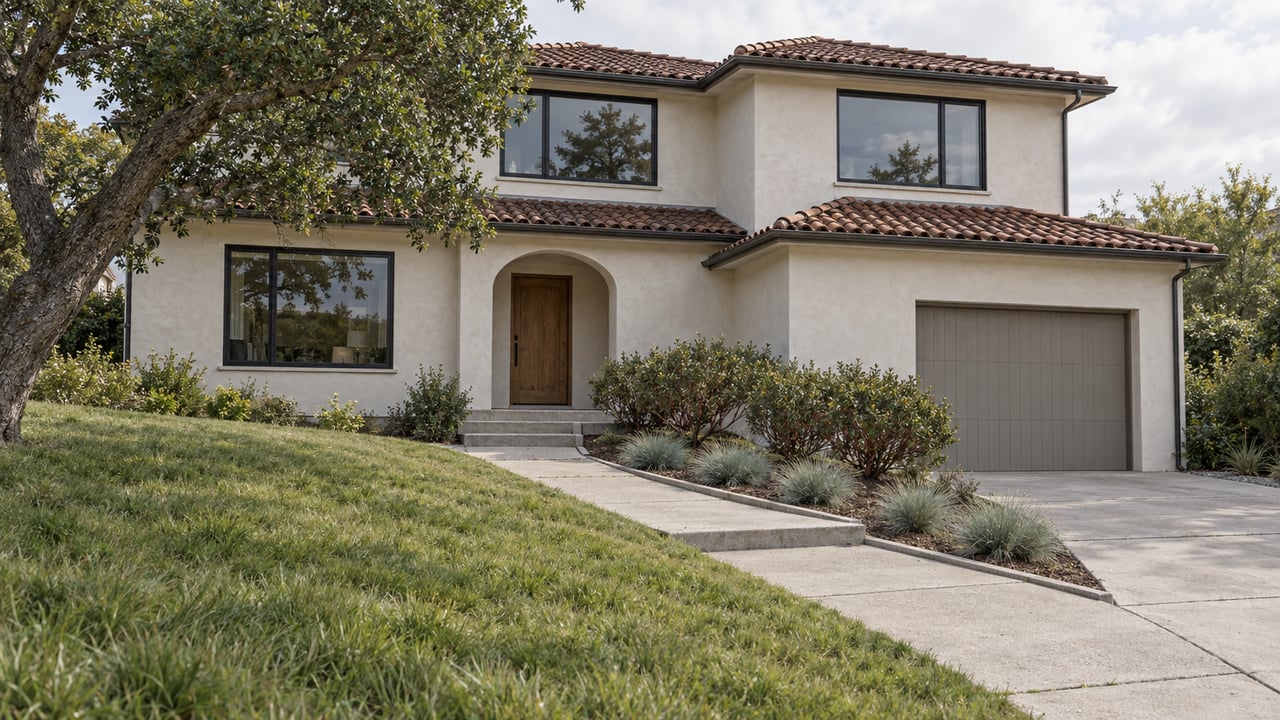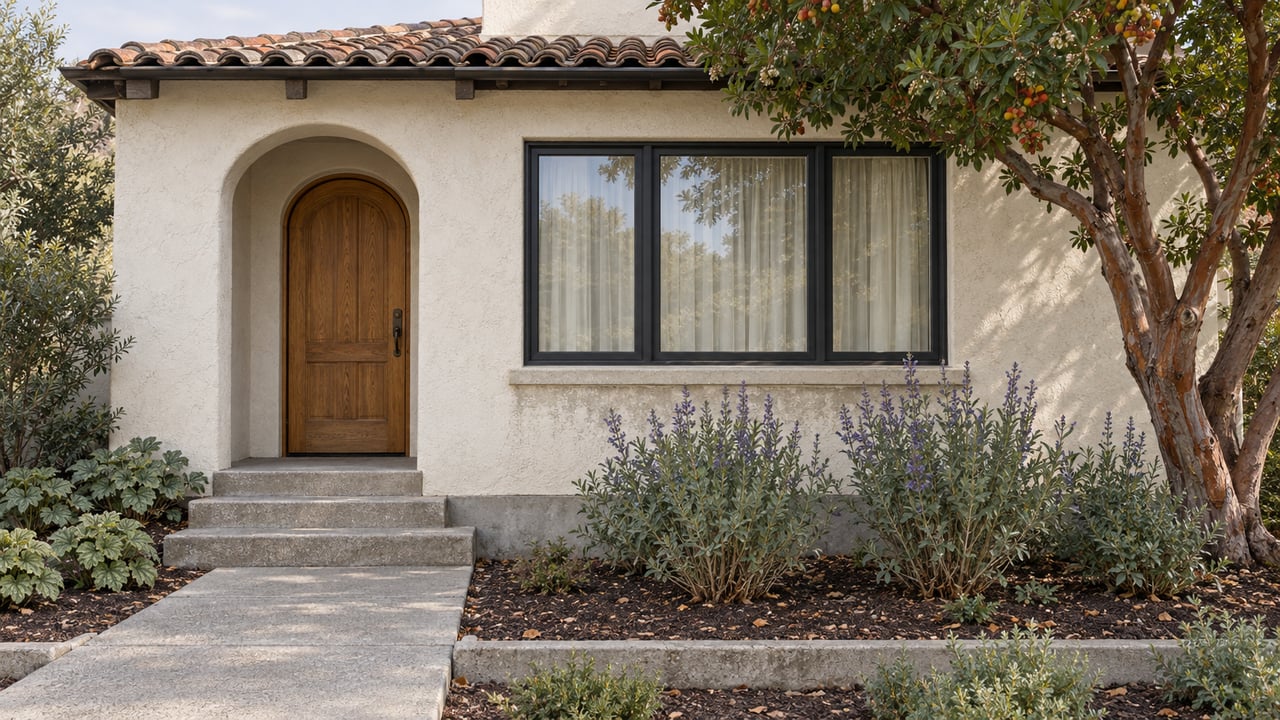
Two Albany houses list for the same price. One is a modest bungalow on a deep lot. The other is a larger, expanded home on a tight lot. Which one ends up paying more for streets and emergency services once the old racetrack becomes a park?
Under today's formulas, the bungalow on the big lot pays more. Under the formulas on Albany's November 3 ballot, that order would flip once the park transfer closes. The house with more floor area would take on more of the cost, and the bungalow on the big lot could end up roughly where it started.
The parcel that carried a fifth of two taxes
Golden Gate Fields is not just Albany's largest piece of land. It is also one of the city's biggest contributors to two special parcel taxes. In fiscal year 2025/26, the site paid $398,672 toward the city's emergency medical services tax and $290,712 toward the street paving and storm drain tax, according to the City of Albany's October 5, 2026 staff report on Golden Gate Fields revenue impacts. The same report puts the city's total revenue at risk from the sale at $1,072,851 a year, and $895,736 of that comes from special parcel taxes and assessments.
The loss falls on specific programs, not on the city budget as a whole. Finance Director Reina Schwartz told the City Council that the site provides less than half of 1% of the general fund. It provides roughly one-fifth of the EMS and street paving tax revenue, Albany Scanner reported. "The vast majority of the impact that is potentially associated with this sale is to special revenue sources," she said.
That is why a park deal shows up on homeowners' tax bills. According to the park district's project page, the plan is for Trust for Public Land to buy the property for about $175 million, with the East Bay Regional Park District as long-term owner and $20 million coming from the district's Measure WW funds. The state is putting in $125 million through AB 113, which was signed September 18, 2026. The city's staff report treats the sale as taking the site off Albany's tax rolls.
What Measures P and Q change, and when
The two measures don't simply raise rates. Each one keeps its current formula until a parcel of 500,000 square feet or more in Albany becomes wholly exempt from the tax. At that point the City Council may switch to a new basis. Both measures needed two-thirds approval, and the Alameda County Registrar of Voters posts the official count.
| Tax | Current basis | Maximum rate once the big parcel goes exempt |
|---|---|---|
| Measure P, street paving and storm drain | $167.65 per equivalent residential unit; a single-family home counts as one unit | $0.0638 per lot square foot, all parcels |
| Measure Q, EMS, advanced life support and fire | $0.0807 per lot square foot | $0.254 per building square foot for developed residential and commercial property; $0.110 per lot square foot for undeveloped parcels |
The two taxes move in opposite directions. The street tax shifts from a flat per-home charge to a charge based on land. The EMS tax shifts from land to floor area. Under the Measure Q ordinance text, building and lot measurements come from the Alameda County Assessor's secured roll. The number that counts is the square footage on the county's records, not the number on a listing flyer.
Under the Measure P ordinance text and the Measure Q text, the new rates take effect in the fiscal year after the city determines the large parcel is exempt. The park district's project page now projects closing in early 2027 and transfer in spring 2027. If the sale falls through, the current formulas stay in place.
Three houses, same street, different outcomes
The city's documents don't include sample household bills, so here is the arithmetic using the maximum rates the measures state. It leaves out inflation adjustments and any low-income relief. These are illustrations, not city figures.
House A: 5,000 square foot lot, 1,800 square feet of building. Street tax goes from $167.65 to $319.00. EMS tax goes from $403.50 to $457.20. Combined, the bill rises from $571.15 to $776.20, an increase of $205.05.
House B: 7,500 square foot lot, 1,200 square feet of building. Street tax goes from $167.65 to $478.50. EMS tax drops from $605.25 to $304.80. Combined, it goes from $772.90 to $783.30, an increase of $10.40.
House C: 4,000 square foot lot, 2,400 square feet of building. Street tax goes from $167.65 to $255.20. EMS tax goes from $322.80 to $609.60. Combined, it goes from $490.45 to $864.80, an increase of $374.35.
Look at House B and House C. Today the bungalow on the big lot pays more than the larger home on the small lot, by about $280 a year. Under the new formulas that order flips. The house that has been expanded upward or outward on a small lot takes the biggest increase, and the house with more land than floor area barely moves.
For buyers, the current owner's tax bill tells you less than usual. It shows what the property paid under formulas that may change once the park transfer closes. The two measurements to look for are the lot square footage and the building square footage on the assessor's record.
The parts that apply either way
Some provisions in both measures don't depend on Golden Gate Fields at all. Both lower the annual inflation cap from 5% to 3%. Both add a 50% exemption for low-income homeowners on top of the existing full exemption for very-low-income homeowners. Both add renter rebates at matching levels. Those apply whether or not the sale closes.
A separate measure on the same ballot works differently. Measure T is a new street trees and streetlighting tax at $0.0354 per lot square foot, with exemptions for qualifying low-income residents. Councilmember Preston Jordan has estimated that if P, Q and T all pass and the deal goes through, the average single-family homeowner would pay close to $300 more a year, with less for condo owners, Albany Scanner reported.
A gap that stays open for years
Measures P and Q were sized to replace about $700,000 a year, roughly $300,000 for streets and $400,000 for emergency services. That still leaves about $383,000 a year uncovered if the sale goes through. Reserves could cover the projected library loss of about $100,000 a year for about five years. The city has not identified replacement revenue for about $163,000 now used for landscaping and lighting, sidewalks and pathways, open space and public safety pension costs.
The park itself may eventually help. Council members said they support revenue-generating amenities on the site, but Jordan put the timeline plainly, as Albany Scanner reported: "Even under the best scenario, that's not going to materialize for probably 10 years." The park district's posted schedule has community planning running from 2027 to 2029, with phased construction after that, depending on funding. At the September 28 town hall, ideas ranged from habitat restoration to mini-golf, a hotel and a spa, and none of them has been adopted, Berkeley Scanner reported.
Meanwhile the site itself is changing. The agreement that went before the park district board on October 20 requires the seller, Golden Gate Land Holdings, to demolish the grandstand and other above-ground structures and to pay the park district $8.25 million for work, testing and insurance related to known site conditions, Berkeley Scanner reported. According to Locunity's summary of that meeting, the park district board approved the package 7–0. The Bay Trail stays open throughout.
Quick answers
Does a buyer closing this winter pay the new rates right away? No. Under both ordinances, the new formulas start in the fiscal year after the city determines the large parcel is exempt, and the park district projects the transfer for spring 2027.
Could anyone's bill go down? Yes, for the EMS portion. A developed property with a lot of land and a small building would pay less under Measure Q's building-based rate. Measure P's land-based street tax would partly offset that, as House B shows.
Where do the square footage figures come from? The Alameda County Assessor's secured roll, according to the Measure Q ordinance.
This is general information about how the measures are written, not tax, legal or financial advice. Before you rely on any of these figures, check your own situation with a tax professional and your county records.
If you're comparing two Albany homes this winter, or wondering what your own lot and building size mean for a sale next year, we're glad to look at the assessor's figures with you and talk through what they mean for your decision. Souza Niroomand Team has followed Albany's waterfront for decades. Let's Sit Down and Talk.